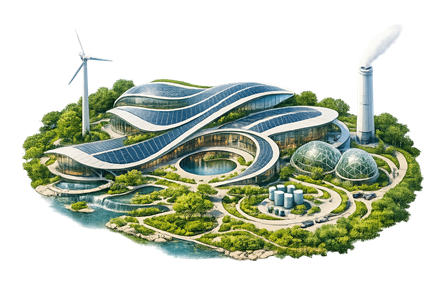
Sustainable building construction is an approach to designing, constructing, and operating buildings in ways that reduce environmental impact, enhance human well-being, and ensure economic viability over the long term.
Sustainable building construction is an approach to designing, constructing, and operating buildings in ways that reduce environmental impact, enhance human well-being, and ensure economic viability over the long term. As cities expand rapidly—especially in developing countries like India—the need for eco-friendly, resource-efficient construction has become more urgent than ever.
Sustainable construction is not just about using “green materials.” It is a holistic philosophy that integrates energy efficiency, water conservation, waste reduction, environmental responsibility, and occupant comfort throughout a building’s life cycle.
The construction industry is one of the largest consumers of natural resources. Globally, buildings account for a significant share of:
Organizations such as the United Nations Environment Programme and the World Green Building Council consistently highlight that the building sector is central to climate change mitigation.
In India, rapid urbanization in cities like Mumbai, Delhi, and Bengaluru has intensified the demand for residential, commercial, and infrastructure projects. Without sustainable practices, this growth can strain natural ecosystems and increase pollution.
(a) Energy Efficiency
Energy-efficient buildings reduce electricity consumption through:
Integration of renewable energy sources such as rooftop solar panels further reduces dependence on fossil fuels.
(b) Water Conservation
Water scarcity is a critical issue in many Indian states. Sustainable buildings incorporate:
These measures significantly reduce freshwater demand and improve long-term sustainability.
(c) Sustainable Materials
The selection of materials plays a crucial role in reducing environmental impact. Sustainable materials are:
Examples include fly ash bricks, bamboo, recycled steel, and eco-friendly paints.
(d) Waste Reduction
Construction and demolition waste contribute heavily to landfills. Sustainable practices include:
These steps reduce both environmental damage and project costs.
(e) Indoor Environmental Quality
A sustainable building must prioritize the health and comfort of its occupants. This includes:
Healthy indoor spaces enhance productivity and well-being.
standardize sustainable practices, various rating systems have been developed:
In India, IGBC and LEED certifications are increasingly adopted by commercial developers and residential builders to demonstrate environmental responsibility.
Environmental Benefits
Economic Benefits
Social Benefits
India is witnessing a shift toward green construction practices. Government initiatives promoting renewable energy, rainwater harvesting mandates, and energy-efficient building codes are encouraging sustainable development.
Developers are increasingly recognizing that sustainability is not an expense—it is an investment. While initial construction costs may be slightly higher, long-term savings and environmental benefits outweigh the upfront expenditure.
The future of construction lies in integrating technology with sustainability:
Sustainable building construction represents a responsible and forward-thinking approach to development. It balances environmental protection, economic growth, and social well-being. As climate challenges intensify, adopting sustainable practices is no longer optional—it is essential.
By designing smarter, building greener, and thinking long-term, we can create structures that serve present needs without compromising the ability of future generations to meet theirs.
Sustainability in construction is not just about buildings—it is about building a better future.